
Oily Scalp but Dry Ends? Here Is What Your Hair Needs

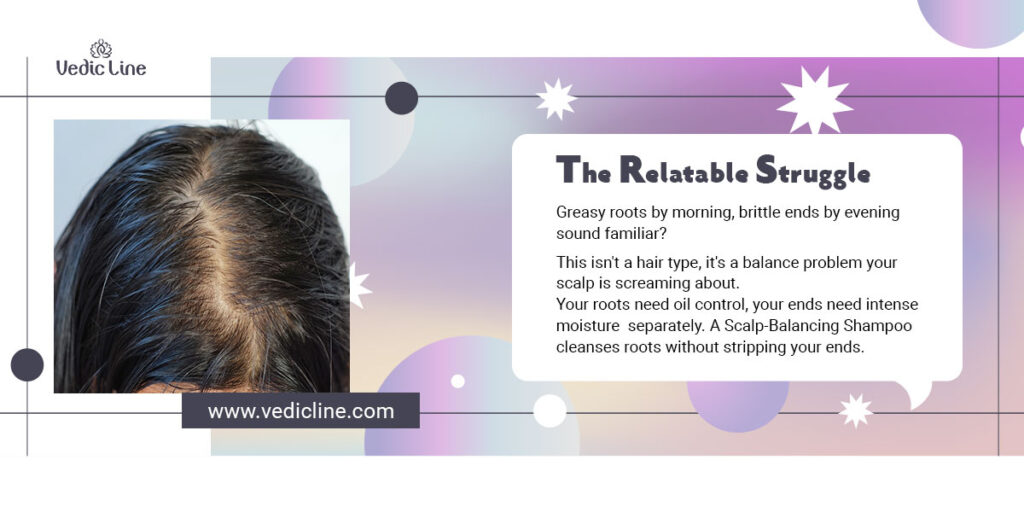
If your roots feel greasy by noon while your ends are brittle and crying for moisture, you are not imagining things. This is one of the most common — and most misunderstood — hair problems out there.
You wash your hair, and within hours, your scalp is slick with oil. Yet the moment you reach the ends, they feel parched, rough, and prone to breakage. It seems contradictory, almost unfair. How can one head of hair be too oily scalp and too dry at the same time?
The answer lies in understanding that your scalp and your hair strands are two very different things — and they often have entirely different needs.
Why does this combination happen
Your scalp is skin. It contains sebaceous glands that produce sebum, a natural oil that protects and moisturises both the oily scalp and the hair shaft. The problem begins when sebum production is overactive — triggered by hormonal changes, stress, a diet high in refined carbs, or even over-washing, which strips the scalp and causes it to compensate by producing even more oil.
Meanwhile, your hair ends are the oldest part of your hair. They have been exposed to heat styling, sun, friction, chemical treatments, and environmental damage for months or even years. The sebum produced at the roots rarely travels all the way down to the ends — especially if your hair is long, curly, or frequently washed. The result? An imbalanced hair profile where the roots are swimming in oil while the ends are dehydrated and damaged.
Key Insight
Over-washing to combat greasiness is one of the biggest mistakes people make. It triggers a rebound oil effect, making the scalp produce even more sebum than before.
The mistakes that make it worse
Most people with this hair type make the understandable mistake of treating the entire head the same way. They reach for a clarifying or oil-control shampoo to fight the grease, apply it root to tip, and skip conditioner entirely out of fear it will make roots even oilier. This approach is a recipe for disaster.
Stripping shampoos dry out the ends further while shocking the scalp into producing more oil. Skipping conditioner leaves the ends fragile and unprotected. Even applying dry shampoo too often can clog follicles and worsen oiliness over time if it builds up without a proper cleanse.
Avoid silicone-heavy conditioners applied near the scalp. They coat the roots without nourishing them, adding weight and contributing to greasiness without solving the dryness problem at the ends.
How to cleanse the right way
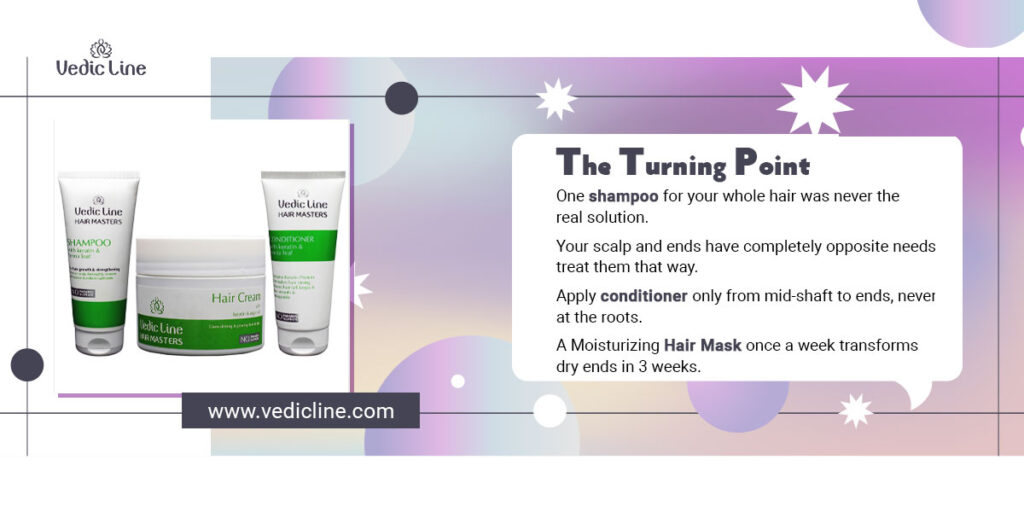
The single most effective shift you can make is adopting zone-based hair care. This means treating your scalp and ends as separate areas with separate needs during every wash.
When shampooing, focus the product entirely on your scalp. Use a gentle, sulphate-free or low-sulphate shampoo that cleanses without over-stripping. Massage it into the roots using your fingertips, not your nails, to stimulate circulation and lift oil buildup. Let the lather rinse through the lengths naturally — this provides just enough cleansing without harsh direct application.
For the ends, conditioner is non-negotiable. Apply a moisturising or reparative conditioner from mid-length to tips and leave it on for two to three minutes before rinsing. If your ends are severely dry, swap regular conditioner for a deep conditioning mask once a week.
Ingredients to look for and avoid
✅For the scalp
Salicylic acid, tea tree oil, zinc pyrithione, niacinamide, witch hazel — these regulate sebum and keep follicles clear without aggressive drying.
💧For the ends
Hyaluronic acid, shea butter, argan oil, ceramides, and panthenol — these restore moisture, rebuild the hair barrier, and prevent further breakage.
🚫What to avoid
Sulphates, alcohol-heavy sprays near the oily scalp, and heavy silicones (dimethicone) near roots that weigh hair down and trap buildup.
Build a routine that works for both
Aim to wash your hair every two to three days rather than daily. Frequent washing upsets the scalp’s natural balance. On days between washes, a targeted dry shampoo applied only at the roots can absorb oil without disturbing the ends.
Once a week, treat your ends with a hot oil treatment or a leave-in conditioning serum. Oils like jojoba and argan mimic the structure of natural sebum and absorb well without leaving a greasy residue. When heat styling, always apply a heat protectant from mid-shaft to ends — never skip this step if you are trying to repair dry, damaged tips.
The mindset shift that changes everything
Healthy hair is not about finding one perfect product. It is about understanding that your oily scalp health and your hair health are connected but distinct. Once you stop treating your hair as a single uniform surface and start responding to each zone’s actual needs, the cycle of greasy roots and brittle ends can genuinely be broken.
Be patient. It can take four to six weeks of consistent zone-based care before you see a meaningful shift in oil production and end condition. Your scalp needs time to recalibrate, and your ends need consistent nourishment to rebuild. Stick with it — the results are worth every careful wash day.
Final Tip
Drink more water, reduce refined sugar intake, and manage stress levels. Internal factors drive oliy scalp sebum production just as much as your product choices do. A balanced scalp often starts from within.